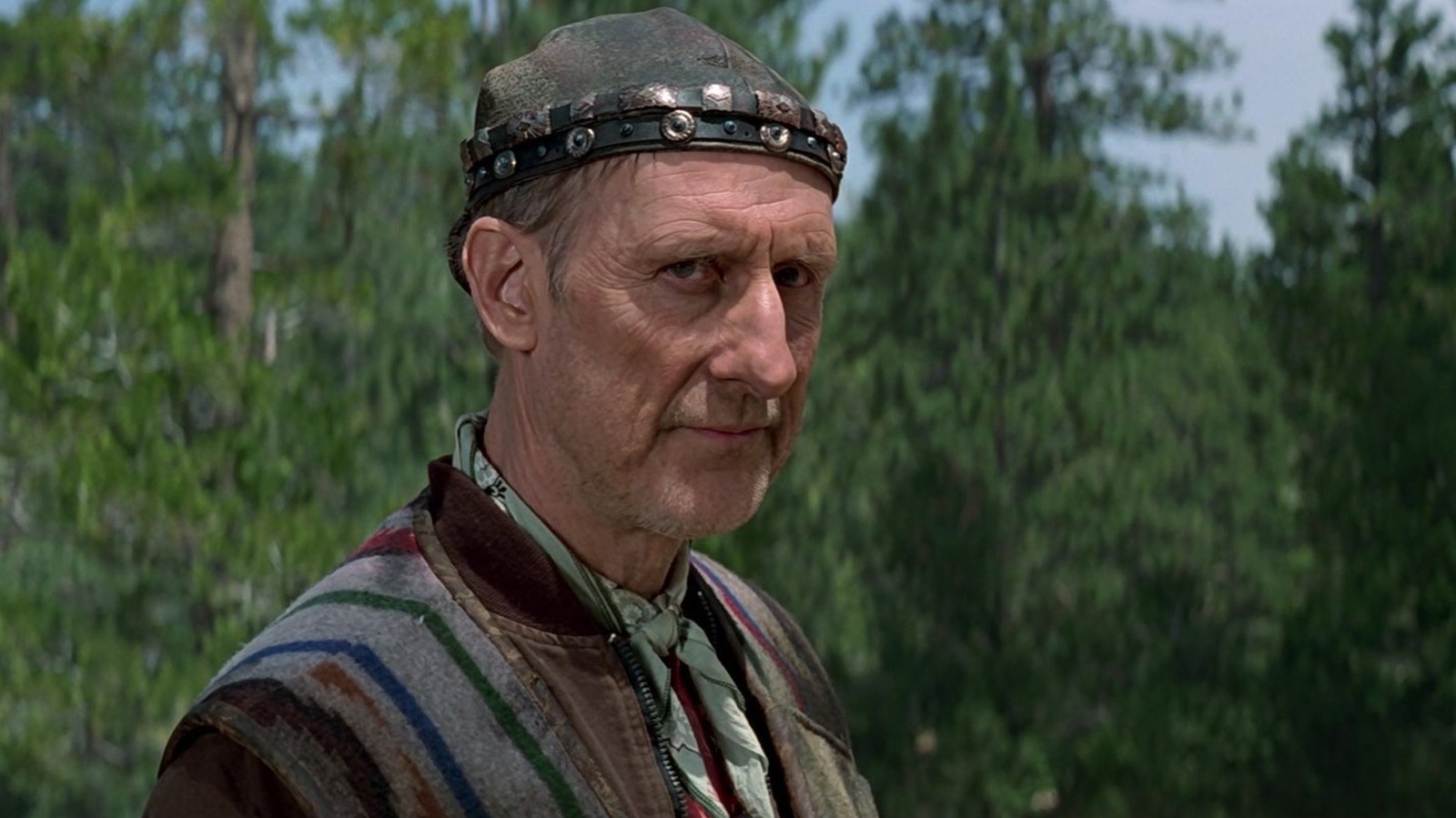
When Star Trek: First Contact hit theaters, audiences were captivated by the film’s bold vision of humanity’s first encounter with an alien species. But behind the scenes, one casting decision carried deeper significance than most realized. Actress Alfre Woodard, who portrayed Lieutenant Commander Lily Sloane, brought more than dramatic range to the role—she brought a personal fascination with extraterrestrial life that shaped how she approached the character. Her participation wasn’t just another Hollywood booking; it was a convergence of real-world curiosity and science fiction storytelling.
Alfre Woodard’s Role in First Contact Was More Than Acting
Lily Sloane, the engineer pivotal to Zefram Cochrane’s warp flight, is more than a supporting character. She’s the moral center of the film—a bridge between past and future, skepticism and belief. Woodard’s casting was deliberate. Director Jonathan Frakes later noted her “grounded intensity” and ability to convey intellectual and emotional weight in equal measure. But what’s rarely discussed is how Woodard’s off-screen interest in space and the possibility of life beyond Earth informed her performance.
Sloane grapples with humanity’s readiness for contact. She questions Cochrane’s motives, challenges Picard’s militaristic instincts, and ultimately becomes the conscience of first contact. Woodard didn’t play this as abstract philosophy. She drew from years of reading NASA reports, attending lectures on astrobiology, and engaging with researchers exploring the Fermi Paradox. Her portrayal carried the weight of someone who had genuinely wrestled with the implications of meeting an alien civilization.
Real-Life Belief in Extraterrestrial Life Influenced Her Interpretation
Long before joining the Star Trek franchise, Woodard cultivated a quiet but serious interest in the search for extraterrestrial intelligence (SETI). She’s spoken in interviews about her fascination with the Drake Equation and her concern over how governments handle UFO disclosures. In a 2018 panel at the Santa Fe Science Symposium, she said, “I don’t believe we’re alone—not because I want to, but because the math and the universe’s scale make it statistically unreasonable.”
This belief wasn’t mere speculation. She’s met with former NASA scientists, read declassified Air Force documents on UAPs (unidentified aerial phenomena), and supported organizations advocating for transparency in space exploration. When offered the role in First Contact, she accepted in part because the script mirrored real ethical dilemmas she’d studied: How do we represent humanity? Who gets to speak for Earth? What responsibilities come with technological leaps?
Her understanding of these questions wasn’t performative. It was experiential.
Why Her Background Made a Difference On Screen
Woodard’s real-life engagement with extraterrestrial studies gave her a unique lens through which to interpret Sloane’s arc. Consider the film’s pivotal scene where Sloane confronts Picard over his obsession with the Borg.
“You’re not going to achieve perfection by suppressing everything that makes you different,” she says, echoing a theme central to both Star Trek and modern SETI ethics.
This moment isn’t just about character growth. It’s a reflection of Woodard’s own views on diversity as a prerequisite for interstellar diplomacy. In a behind-the-scenes featurette, she explained that real contact with aliens wouldn’t succeed if humanity hadn’t first reconciled its internal divisions. “How can we sit at a table with beings from another world,” she asked, “if we can’t even sit at one with each other?”
This wasn’t in the script. It was in her bones.

Her preparation included studying historical first contacts—colonial encounters, indigenous diplomacy, Cold War signals—and how miscommunication led to conflict. She urged the writers to emphasize Sloane’s skepticism not as resistance, but as a form of responsibility. The result? A character who doesn’t just witness history but interrogates it.
The Broader Pattern: Actors with Genuine Scientific Curiosity
Woodard isn’t alone. Several actors in science fiction have leveraged real academic or research interests to deepen their performances:
- Leonard Nimoy studied anthropology and often tied Vulcan logic to real philosophical systems.
- Kate Mulgrew (Captain Janeway) has worked with the Planetary Society and advocated for Mars exploration.
- William Shatner funded space memorabilia research and participated in NASA outreach.
- Seth Shostak, while not an actor, is a SETI astronomer who consulted on Star Trek episodes and even cameoed.
- LeVar Burton (Geordi La Forge) became a science literacy advocate post-Trek, hosting StarTalk and promoting STEM.
But Woodard’s case stands out because her interest predates her role and directly influenced how she shaped a character central to one of Trek’s most thematically rich films.
How Real-World UFO Research Enhances Sci-Fi Storytelling
The authenticity Woodard brought to First Contact underscores a broader truth: science fiction benefits when creators and performers engage with real science. When actors understand the weight of concepts like warp theory, xenobiology, or interspecies ethics, their performances gain depth.
Too often, sci-fi treats alien contact as spectacle. Woodard insisted on grounding it in human response—fear, awe, confusion. She referenced real UFO whistleblower testimonies when rehearsing her reactions to the Borg sphere’s arrival. “It’s not unlike how people describe seeing a UAP,” she said. “Not just shock—but a kind of ontological crisis. Everything you thought you knew shifts.”
This attention to psychological realism elevated the film beyond typical franchise fare. It made First Contact not just a story about meeting aliens, but about who we become when faced with the unknown.
Behind the Scenes: Conversations That Shaped the Film
Woodard didn’t keep her insights to herself. She initiated discussions with writers and producers about how humanity might realistically prepare for contact. During pre-production, she shared a declassified CIA report on Project Blue Book, arguing that historical government secrecy could inform Sloane’s distrust of authority.
Her input led to subtle but meaningful script changes. One deleted scene, now in the archives, showed Sloane accessing a classified database on UFO sightings—mirroring the real-life work of researchers like Dr. Jacques Vallée. Though cut for pacing, the idea influenced her demeanor throughout the film: cautious, informed, and morally vigilant.
Hollywood’s Growing Respect for Scientific Authenticity
Star Trek: First Contact arrived at a time when UFO discourse was still marginalized. Yet the film treated the idea of alien contact with gravity—thanks in no small part to Woodard’s insistence on realism. Today, as the Pentagon releases UAP videos and NASA convenes UFO study teams, her approach feels prescient.
Films like Arrival, Contact, and Ad Astra now routinely consult astrophysicists and linguists. But Woodard was applying that principle from within the performance itself—using her personal research to inform emotional truth.
That’s a model for future sci-fi casting: not just star power, but intellectual investment.
A Legacy Beyond the Screen
Alfre Woodard’s role in Star Trek: First Contact endures because it was more than acting. It was advocacy through performance. She used the platform to spotlight real questions about humanity’s readiness for contact, our ethical obligations, and the dangers of repeating colonial patterns in space.
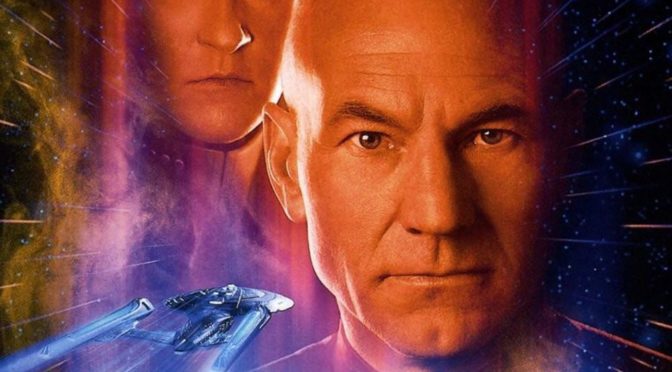
Since the film, she’s continued speaking at science conferences, supporting transparency in aerospace research, and mentoring young actors interested in science communication. Her legacy isn’t just a memorable character—it’s a reminder that storytelling and science aren’t opposites. They’re partners in imagining what’s possible.
When we watch First Contact today, we’re not just seeing fiction. We’re seeing a performance shaped by genuine inquiry. And that makes all the difference.
What You Can Do Next
If you’re creating sci-fi content—whether writing, filming, or casting—seek out voices like Woodard’s. Look for collaborators with real scientific curiosity. Encourage research. Let off-screen knowledge shape on-screen truth. The result won’t just be more believable stories. It’ll be more meaningful ones.
And the next time you watch Lily Sloane challenge Picard’s ethics, remember: that fire wasn’t just acting. It was informed conviction.
#### Frequently Asked Questions
Did Alfre Woodard ever work with NASA? No, she has not been employed by NASA, but she has attended their public lectures, engaged with former scientists, and supported space transparency initiatives.
What books influenced her views on extraterrestrial life? She’s cited The Eerie Silence by Paul Davies and Revelations by Dr. Jacques Vallée as key influences on her thinking about UFOs and contact.
Was her interest in UFOs common knowledge during filming? Not widely. It was known among the writing team and director, but not publicized at the time.
Did her research lead to any script changes? Yes—her input influenced Sloane’s skepticism and led to discussions about adding a classified UFO database subplot, though it was ultimately cut.
How does her approach differ from other Star Trek actors? While many Trek actors support science, Woodard uniquely applied her research directly to character development and ethical framing.
Is there footage of her discussing extraterrestrial studies? Yes—she spoke about it at the 2018 Santa Fe Science Symposium and in a 2021 interview with Scientific American.
Does Star Trek incorporate real UFO research? Increasingly, yes—consultants from SETI and aerospace have advised later series, but Woodard brought that insight from within the cast as early as 1996.
FAQ
What should you look for in How a Star Trek Actor’s UFO Research Shaped First Contact? Focus on relevance, practical value, and how well the solution matches real user intent.
Is How a Star Trek Actor’s UFO Research Shaped First Contact suitable for beginners? That depends on the workflow, but a clear step-by-step approach usually makes it easier to start.
How do you compare options around How a Star Trek Actor’s UFO Research Shaped First Contact? Compare features, trust signals, limitations, pricing, and ease of implementation.
What mistakes should you avoid? Avoid generic choices, weak validation, and decisions based only on marketing claims.
What is the next best step? Shortlist the most relevant options, validate them quickly, and refine from real-world results.