College football rosters turn over fast. When a top-tier prospect commits to the NFL after his junior season—or even earlier—his absence creates a vacuum. Teams scramble. Coaches adjust schemes. And ESPN, as it always does, steps in to identify the next wave: the replacements stepping into the shoes of soon-to-be first-round picks in the 2026 NFL Draft.
These aren’t just backups. They’re successors—players positioned not only to maintain production but to surpass it. ESPN’s analysis goes beyond depth charts, spotlighting athletes whose trajectory, skill set, and opportunity align to fill the gap left by elite departing talent. This isn’t about who’s next on the bench. It’s about who’s ready to become the face of the program.
Why First-Round Replacements Matter More Than Ever
The rise of Name, Image, and Likeness (NIL) and the transfer portal has turned roster management into a high-wire act. When a projected first-rounder exits early, his replacement isn’t just filling snaps—he’s inheriting endorsement deals, media attention, and leadership expectations.
ESPN’s framework for identifying these players includes three key factors: - Scheme fit: Can the player thrive in the same system? - Upside vs. experience: Is he a raw five-star recruit, or a grinder with game reps? - Opportunity timing: Is the door wide open, or is there a logjam?
For example, when Jaylen Johnson—a projected top-15 pick at running back for South Carolina—announced his intention to enter the 2026 draft after his junior year, ESPN immediately spotlighted true freshman Duce Johnson. Not just because he was next on the depth chart, but because his blend of power running and pass protection mirrored Jaylen’s NFL-ready profile.
Quarterback Successors: Who’s Leading the Next Wave?
Quarterback replacements are the most scrutinized. One misstep in succession can derail a season. ESPN has tracked several high-stakes transitions, with the following standouts emerging.
LSU: From Jayden Daniels to Walker Howard (Again) and Garrett Nussmeier’s Departure Daniels’ 2023 Heisman run set a high bar. While Nussmeier stabilized the position in 2024, his NFL departure in 2025 reopened the competition. ESPN now points to Garrett Nussmeier’s younger brother, Landry Nussmeier, a redshirt freshman with a cleaner release and better pocket mobility. Combine that with offensive coordinator Garret McGuire’s commitment to a pro-style scheme, and Landry looks increasingly like the heir apparent.
Oregon: Dillon Gabriel’s Exit, Enter Marcus Moore Gabriel’s fifth-year campaign was a masterclass in efficient passing. His replacement? Marcus Moore, a transfer from New Mexico with elite arm talent and experience in spread systems. ESPN notes Moore’s 6'4", 220-pound frame and ability to drive the ball 60+ yards in the air—traits that fit Dan Lanning’s desire for a downfield thrower.
| Team | Departing QB (2026 Draft) | ESPN-Picked Replacement | Key Advantage |
|---|---|---|---|
| LSU | Garrett Nussmeier | Landry Nussmeier | Bloodline familiarity, accuracy |
| Oregon | Dillon Gabriel | Marcus Moore | Arm talent, deep-ball precision |
| Miami | Cam Ward | Jacurri Brown | Dual-threat explosiveness |
| Texas | Quinn Ewers | Maalik Murphy | Physicality, starter experience |
Cam Ward’s likely early exit from Miami leaves a gap in both production and leadership. ESPN’s choice, Jacurri Brown, brings elite rushing ability and a cannon arm. At 6'3", 230 pounds, he’s built for the ACC grind—and for NFL scouts’ checklists.
Running Backs: Power, Speed, and Availability
Running back is the most replaceable position in theory—but not in practice. Production at this level isn’t just about talent; it’s about trust, timing, and offensive identity.
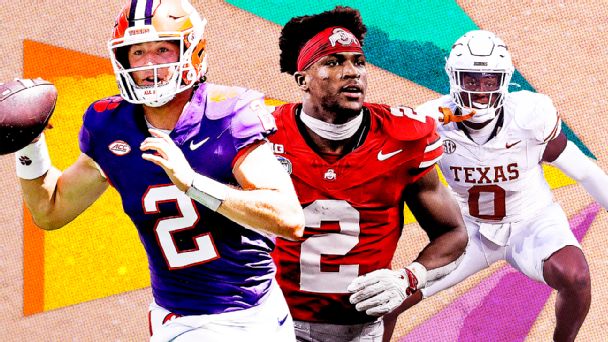
South Carolina: Jaylen Johnson → Duce Johnson Jaylen Johnson rushed for 1,324 yards and 14 touchdowns in 2025. ESPN’s projection of Duce Johnson as his replacement isn’t just a name similarity. Duce, a 5-star true freshman, ran for 217 yards in limited carries during bowl prep. His blend of north-south power and second-level burst mirrors former Gamecock greats like Kevin Harris.
Michigan: Donovan Edwards’ Departure Opens Door for Shamari Robinson Edwards’ elusiveness was unmatched. Without him, Michigan needs a new engine. ESPN highlights Shamari Robinson, a bruising 225-pound junior college transfer. He’s not as fast, but his ability to convert on 3rd-and-short and handle pass protection makes him a better fit for Michigan’s pro-style evolution.
Alabama: Justice Haynes’ NFL Jump, Crimson Tide Turn to Jase McClellan’s Former Backup Haynes’ 1,400-yard season made him a lock for Round 1. His backup, Yamil “Yaz” Cruz, saw mop-up duty in 2024 but exploded in spring drills. At 5'11" and 210 pounds, Cruz combines agility with tackle-breaking strength. ESPN notes his 4.42 speed and improved receiving skills—key for Nick Saban’s successor, whoever that may be.
Wide Receivers: Replacing Production and Quarterback Chemistry
Losing a first-round wide receiver isn’t just about dropping targets. It’s about losing a quarterback’s security blanket.
Ohio State: Marvin Harrison Jr.’s Exit, Paris Johnson’s Rise Harrison’s 1,200-yard season in 2024 was a cornerstone of OSU’s offense. His replacement? Paris Johnson, a 6'4" junior college transfer with NFL bloodlines (no relation to the Bengals OT). ESPN praises his contested-catch ability and route precision. He’s not as explosive, but his 75% catch rate in limited 2025 action suggests reliability.
Tennessee: Nico Iamaleava’s Top Target Gone, Enter Caleb Johnson With Bru McCoy’s likely departure, Tennessee needed a new alpha. ESPN points to Caleb Johnson, a transfer from USC who redshirted in 2024. At 6'3" and 215 pounds, he’s built for the red zone and has already developed chemistry with Iamaleava in spring scrimmages.
Texas A&M: Noah Thomas to Deuce McAllister’s Grandson, Tyreek McGowan When Noah Thomas declared early, the Aggies turned to Tyreek McGowan, a 4-star sophomore with elite body control. ESPN notes his 41-inch vertical and ability to track deep balls—skills that mirror Thomas’s game. In the spring game, McGowan had six catches for 124 yards and two touchdowns.
Defensive Standouts: Who Fills the Pass Rush and Coverage Void?
First-round defensive players are harder to replace. A dominant edge rusher or lockdown cornerback can’t be swapped out like parts. But ESPN has identified several players positioned to step up.
Georgia: Against the Run, Jalen Carter’s Legacy Lives in Trequan Fox With Jalen Carter’s heir, Malik Herring Jr., departing for the 2026 draft, Georgia needs a new interior disruptor. ESPN spotlights Trequan Fox, a 310-pound junior with quick hands and improved lateral agility. He’s not a one-year wonder—Fox posted 6.5 TFLs in 2025 despite limited snaps.
Clemson: The Next Myles Murphy? Meet Jordan Williams Murphy’s 11-sack junior season cemented his draft status. His replacement, Jordan Williams, is a 6'5", 255-pound sophomore who played sparingly in 2024. But ESPN’s film review shows elite bend off the edge and a developing swim move. With coordinator Nick Holt emphasizing edge pressure, Williams could break out in 2025.
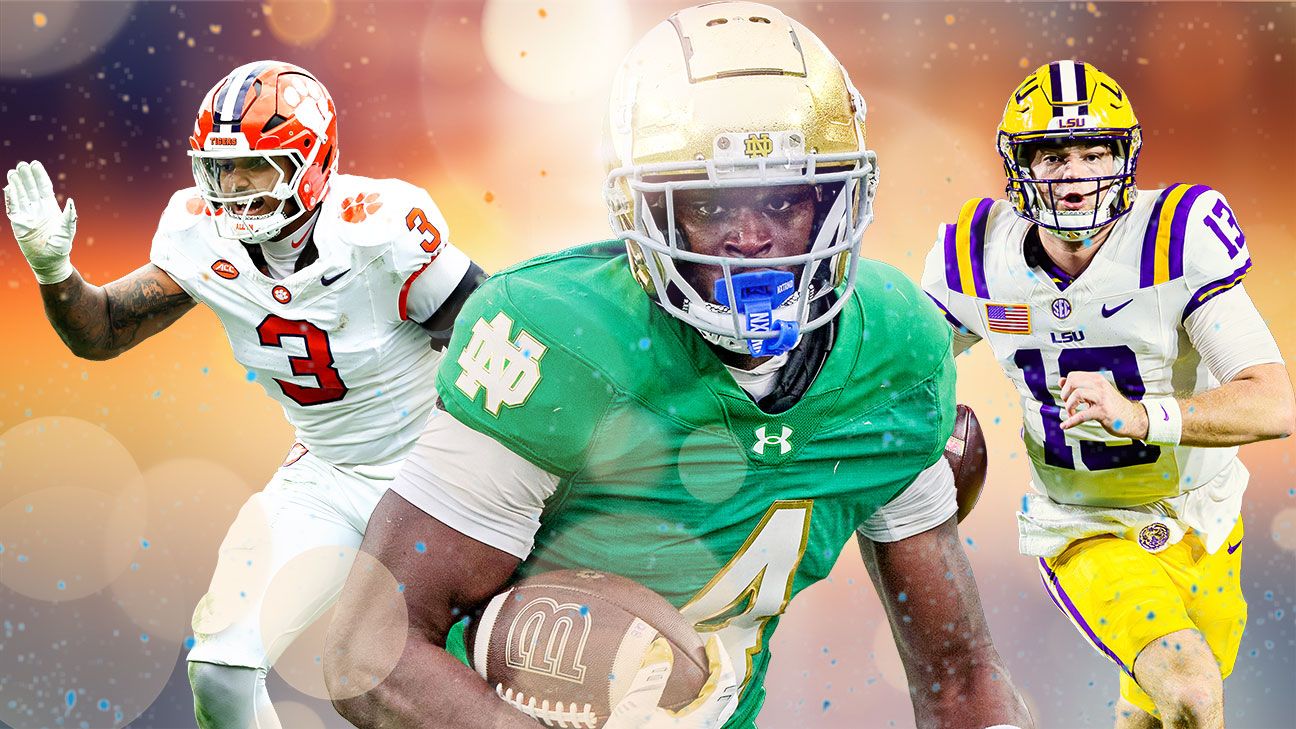
Notre Dame: Cornerback Carousel Continues, Xavier Watts Steps Into Solo Spotlight Xavier Watts won the Bronko Nagurski in 2023 but slid into a safety role. With the Irish losing two cornerbacks to the draft, ESPN projects Watts back to outside corner—where his 6'1" frame and ball-hawking instincts can shine. He’s not a burner, but his timing and anticipation are elite.
Offensive Line: The Unseen Transition
Offensive line replacements rarely make headlines—until they collapse. When a future first-rounder leaves, the ripple effect impacts run blocking, pass protection, and quarterback confidence.
Alabama: Tyler Steen’s Departure, Enter Freshman Titan Lewis Steen’s versatility across the line was invaluable. ESPN’s pick, Titan Lewis, a 6'7", 320-pound true freshman, is already drawing buzz for his anchor strength and foot speed. He’ll likely start at right tackle, but the staff sees him at left guard long-term.
Penn State: Olu Fashanu’s Exit, Oluwatobiloba “Tobi” Fadeyi Ready Fashanu’s 2025 season included zero sacks allowed. His replacement, Tobi Fadeyi, a 6'6", 315-pound redshirt sophomore, played in 10 games as a backup. ESPN notes his consistency in run blocking and improved kick-slide technique. He won’t be flashy—but consistency is the line’s currency.
What Coaches and Recruiters Look For
ESPN’s analysis isn’t just about stats. It’s about intangibles: leadership, recovery from mistakes, and adaptation speed.
Coaches prefer replacements who: - Already have meaningful game reps - Fit the scheme without major adjustment - Show mental toughness under pressure
A common mistake? Promoting the “next best” player without evaluating chemistry with the quarterback or fit in tempo. ESPN cites Illinois in 2024: they promoted a highly rated backup RB who struggled in shotgun formations, leading to a 30% drop in third-down efficiency.
Workflow tip: Programs that succeed in transitions often use spring ball not just for evaluation, but for branding—showcasing the successor early to build fan and media confidence.
The Bottom Line: Replacement Isn’t Just Depth—It’s Evolution
ESPN’s identification of college football’s next wave isn’t about filling gaps. It’s about forecasting evolution. The players stepping into first-round roles aren’t just replacements—they’re the new standard.
For fans, this means rewatching spring games with fresh eyes. For recruits, it’s proof that opportunity can come fast. And for NFL scouts, it’s a heads-up: the next first-rounder might not be the guy who started the season—but the one who took over when it mattered.
Monitor these names. Watch their development. Because by draft night 2026, some of them won’t just be replacements—they’ll be picks.
FAQ
How does ESPN identify replacement players for draft entrants? ESPN uses film study, spring game performance, coaching intel, and scheme alignment to project who can step into a departing star’s role effectively.
Are replacements usually transfers or homegrown talent? It varies. Transfers often fill immediate needs, but homegrown players with developmental time (like redshirts) are preferred for long-term stability.
Can a replacement outperform the original first-round pick? Yes—examples like Alabama’s Mac Jones replacing Tua Tagovailoa show successors can exceed expectations when given the chance.
Do replacements get the same NIL deals? Not automatically. Successors must earn market value, but being named a “heir apparent” can boost NIL appeal quickly.
How early do colleges plan for these transitions? Top programs begin succession planning as soon as a player enters the portal or hints at early draft entry—sometimes as early as December.
Is ESPN’s analysis based on official team depth charts? No—ESPN goes beyond depth charts, relying on insider access, coaching interviews, and performance data not always reflected publicly.
Do all first-round departures have a clear replacement? Not always. Some positions require full rebuilds or scheme changes, especially if multiple starters leave at once.
FAQ
What should you look for in ESPN’s 2026 NFL Draft First-Round Replacements in College Football? Focus on relevance, practical value, and how well the solution matches real user intent.
Is ESPN’s 2026 NFL Draft First-Round Replacements in College Football suitable for beginners? That depends on the workflow, but a clear step-by-step approach usually makes it easier to start.
How do you compare options around ESPN’s 2026 NFL Draft First-Round Replacements in College Football? Compare features, trust signals, limitations, pricing, and ease of implementation.
What mistakes should you avoid? Avoid generic choices, weak validation, and decisions based only on marketing claims.
What is the next best step? Shortlist the most relevant options, validate them quickly, and refine from real-world results.