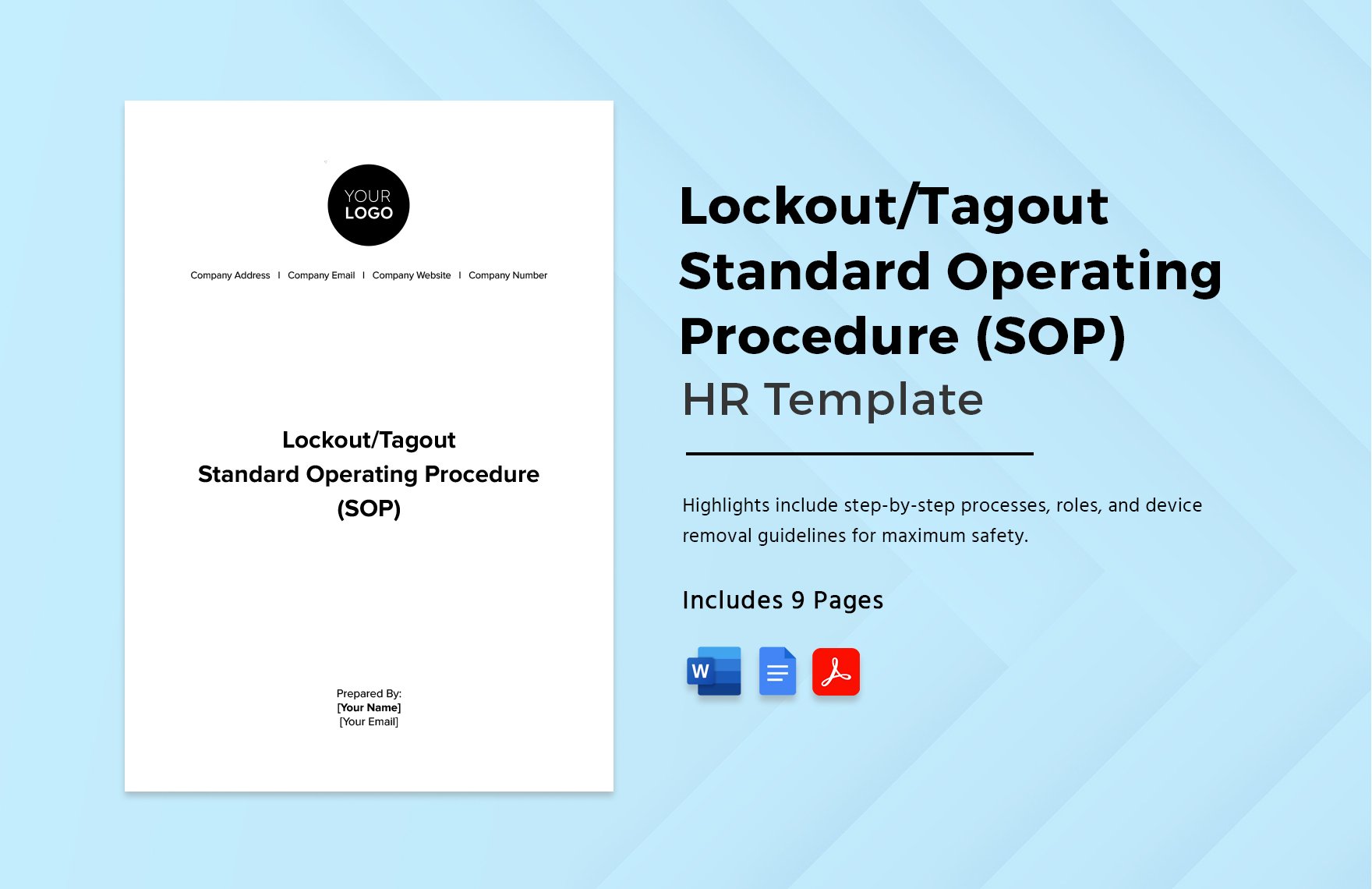
Every year, hundreds of workers suffer serious injuries—or worse—because equipment was accidentally energized during maintenance. The solution? A clear, documented lockout and tagout (LOTO) procedure. But too often, companies rely on memory, verbal instructions, or incomplete forms. That’s where a standardized lockout and tagout procedure PDF becomes essential: a permanent, shareable, and enforceable guide to controlling hazardous energy.
A well-structured LOTO PDF isn’t just a compliance checkbox—it’s a frontline defense against preventable workplace incidents. Whether you’re in manufacturing, facilities management, or industrial maintenance, this guide will show you how to build, implement, and distribute an effective LOTO procedure in PDF format.
Why a Lockout and Tagout Procedure PDF Matters
A PDF version of your LOTO procedure ensures consistency, accessibility, and accountability. Unlike handwritten notes or verbal briefings, a digital PDF:
- Can be distributed across shifts and locations
- Serves as training material for new employees
- Is easily updated and version-controlled
- Meets OSHA’s requirement for documented energy control procedures
OSHA standard 29 CFR 1910.147 mandates that employers establish a written energy control program. A lockout and tagout procedure PDF fulfills this obligation while reducing ambiguity. Without it, misunderstandings about isolation steps, energy sources, or verification processes can lead to catastrophic outcomes.
Real-world example: A technician in a Midwestern plant was clearing a jam in a conveyor system. The machine was assumed to be off, but no formal LOTO procedure had been followed—let alone documented. A co-worker remotely restarted the line, resulting in severe arm injury. An accessible LOTO PDF outlining machine-specific steps could have prevented this.
Key Elements of an Effective LOTO Procedure PDF
Your lockout and tagout procedure PDF should go beyond generic checklists. It must be specific, visual, and actionable. Here’s what to include:
1. Equipment Identification Clearly name and describe the machine or system. Include serial numbers, location, and photos if possible.
2. Energy Sources List every potential energy source: electrical, hydraulic, pneumatic, gravitational, chemical, thermal. For example: - 480V main disconnect - Compressed air line at 120 psi - Elevated conveyor section with spring tension
3. Shutdown Steps Detail the sequence for safely powering down the equipment. Example: 1. Press emergency stop 2. Open control panel disconnect 3. Close isolation valves on hydraulic lines
4. Isolation and Lock Application Specify which locks, hasps, and valves to secure. Assign lock types (e.g., keyed padlock, combination lock) and identify lockout points.
5. Tagout Requirements Include tag content: who applied it, time, reason, and contact info. Tags should be durable and tamper-resistant.
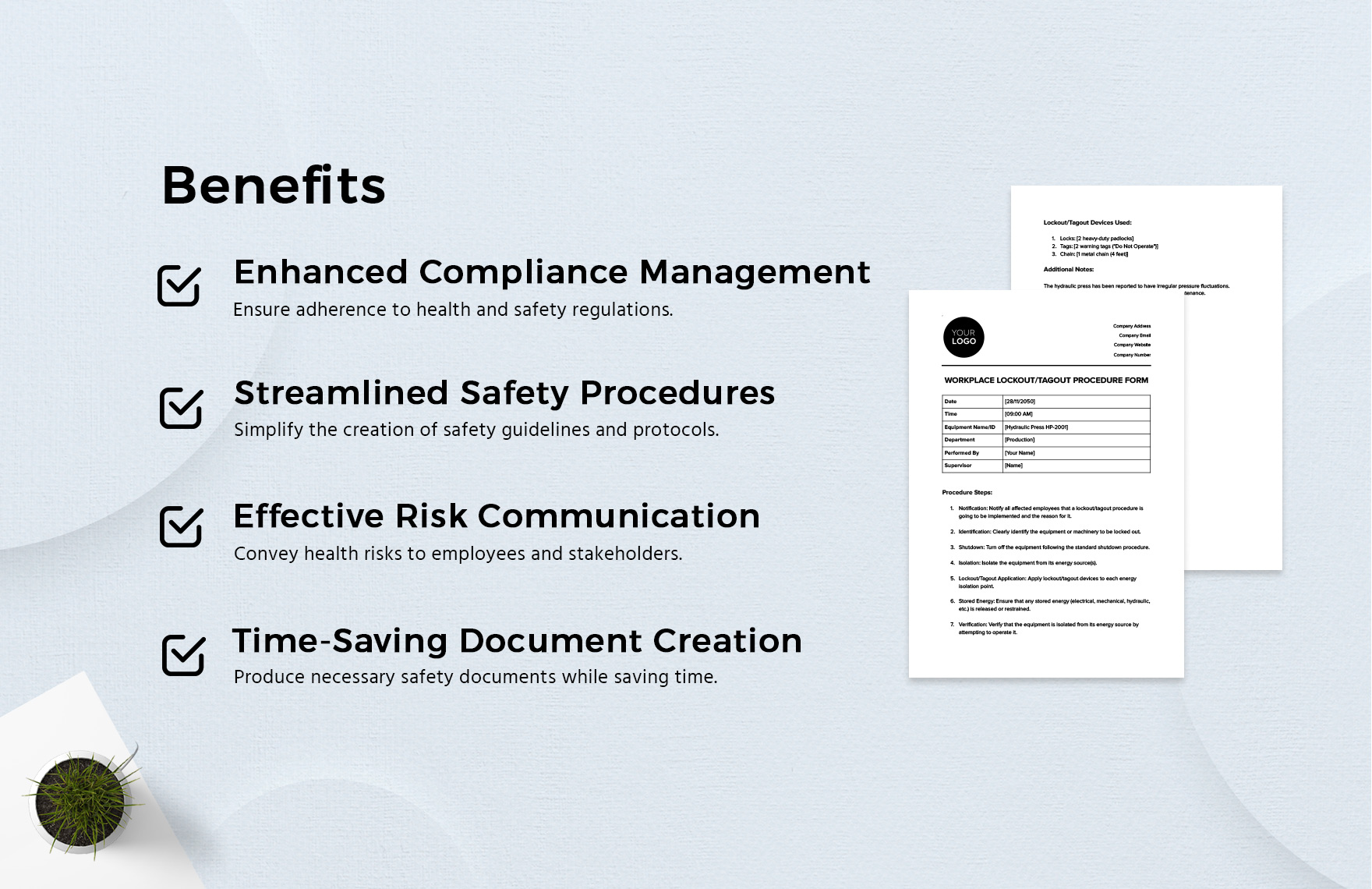
6. Verification of Zero Energy Document how to test for residual energy—using a voltage tester, pressure gauge, or manual inspection.
7. Restoration Steps Outline how to safely return the equipment to service after work is complete.
A strong LOTO PDF includes diagrams, flowcharts, or annotated photos to reduce confusion—especially in high-noise or multilingual environments.
How to Create Your Own LOTO Procedure PDF
You don’t need expensive software to make a professional LOTO PDF. Follow this workflow:
Step 1: Conduct a Machine Audit Walk through your facility and catalog all equipment requiring lockout. Prioritize machines with multiple energy sources or high injury risk.
Step 2: Develop Machine-Specific Procedures Use a template (more on this below) to draft step-by-step instructions for each machine. Involve maintenance staff—they know the quirks.
Step 3: Add Visuals and Safety Notes Insert photos of lock points, electrical panels, or valve locations. Use red boxes for warnings (e.g., “Do not bypass interlocks”).
Step 4: Review and Approve Have safety officers and supervisors review the draft for accuracy and clarity.
Step 5: Convert to PDF and Distribute Save as a PDF to preserve formatting. Store it on shared drives, print copies for workstations, and include it in onboarding packets.
Pro tip: Use editable PDF fields so technicians can digitally sign off during training or audits.
Common Mistakes in LOTO Procedure PDFs
Even well-intentioned documents fail when they overlook real-world usage. Avoid these pitfalls:
- Using generic templates without customization
- A one-size-fits-all PDF won’t account for machine differences. Tailor each procedure.
- Overloading with text, no visuals
- A wall of text is ignored. Use bullet points, icons, and diagrams.
- Failing to update after equipment changes
- If a machine gets a new control panel, the LOTO PDF must reflect it—immediately.
- Not training workers on the document itself
- Just having a PDF isn’t enough. Employees must know how to read and use it.
- Omitting verification steps
- No procedure is complete without confirming energy isolation.
One plant used the same LOTO form for all presses—until a worker was injured on a newer model with capacitor storage. The outdated PDF didn’t mention discharging circuits. The fix? Machine-specific documents with clear disclaimers: “Verify this procedure matches your equipment model.”
Where to Find Free Lockout and Tagout Procedure PDF Templates
Need a starting point? Several organizations offer free, downloadable LOTO PDF templates:
- OSHA.gov
- Offers basic templates and compliance guides. Ideal for small businesses building their first program.
- National Safety Council (NSC)
- Provides customizable LOTO forms with safety checklists and training supplements.
- EHS Daily Advisor
- Features industry-specific templates (e.g., HVAC, manufacturing) in ready-to-use PDF format.
- LockoutTagout.com
- Hosts machine-specific examples and downloadable PDFs with diagrams.
- CDC/NIOSH Workplace Solutions
- Publishes best-practice PDFs with visual aids and bilingual options.

These resources are valuable—but always customize them. A boilerplate PDF may meet formatting needs but miss critical equipment details.
Best Practices for Using LOTO PDFs in Training
A procedure PDF isn’t just a reference—it’s a training tool. Integrate it effectively:
- Use it in onboarding: Walk new hires through the PDF while standing next to the actual machine.
- Conduct drills: Simulate a maintenance scenario and require workers to follow the PDF step-by-step.
- Include in refresher courses: Print a quiz based on the document to test retention.
- Display summaries: Create a one-page LOTO quick reference (derived from the full PDF) for near the machine.
Case example: A food processing plant reduced LOTO violations by 70% after switching from verbal briefings to a tablet-based PDF system. Technicians had to scroll through each step and tap “acknowledge” before starting work.
Integrating Digital LOTO PDFs with Safety Management Systems
Forward-thinking companies are moving beyond static PDFs. They’re embedding LOTO procedures into digital platforms:
- CMMS (Computerized Maintenance Management Systems): Link the LOTO PDF to work orders so it automatically appears during scheduling.
- Mobile apps: Use QR codes on machines that pull up the correct LOTO PDF on a technician’s phone.
- Cloud storage with version control: Ensure everyone accesses the latest procedure—no more outdated printouts.
These integrations reduce human error and enhance audit readiness. If OSHA shows up, you can instantly produce your current, approved LOTO PDFs.
Final Checklist: Is Your LOTO Procedure PDF Effective?
Before rolling out or auditing your document, verify it meets these criteria:
✅ Clearly identifies equipment and energy sources ✅ Includes shutdown, isolation, verification, and restoration steps ✅ Uses visuals (photos, diagrams) to clarify critical points ✅ Is machine-specific, not generic ✅ Has been reviewed and signed by safety personnel ✅ Is accessible to all affected employees ✅ Is regularly updated after equipment changes
If your PDF checks all these boxes, you’re not just compliant—you’re building a culture of safety.
Conclusion: Turn Procedure into Protection
A lockout and tagout procedure PDF is more than a document. It’s a safeguard, a training tool, and a legal necessity. But its real value lies in how it transforms abstract rules into actionable steps that protect real people.
Don’t settle for a forgotten file on a shared drive. Print it, teach it, test it, and revise it. Make your LOTO PDF a living part of your safety workflow—not just a compliance artifact.
Start today: Pick one high-risk machine, draft its LOTO procedure, convert it to PDF, and put it where it will be seen and used. That single step could prevent the next incident.
Frequently Asked Questions
What should a lockout and tagout procedure PDF include? It should detail equipment identification, energy sources, shutdown steps, lock application points, tag requirements, verification methods, and restoration procedures—with visuals where helpful.
Are free LOTO procedure PDFs reliable? Free templates are good starting points but must be customized to your equipment and workplace. Never use them without review and adaptation.
How often should a LOTO PDF be updated? Whenever equipment changes, after an incident, or at least annually during safety audits.
Can a PDF replace physical lockout training? No. The PDF supports training but doesn’t replace hands-on instruction and supervised practice.
Who is responsible for creating the LOTO procedure PDF? Typically, the employer or safety officer, with input from maintenance teams and supervisors.
Should LOTO PDFs be available in multiple languages? Yes, especially if workers aren’t fluent in English. Misunderstandings can be deadly.
Can I use a digital LOTO PDF on a tablet during maintenance? Yes, if the device is rugged, charged, and the file is accessible offline. Some companies use QR codes for instant access.
FAQ
What should you look for in Lockout and Tagout Procedure PDF Guide for Safety Compliance? Focus on relevance, practical value, and how well the solution matches real user intent.
Is Lockout and Tagout Procedure PDF Guide for Safety Compliance suitable for beginners? That depends on the workflow, but a clear step-by-step approach usually makes it easier to start.
How do you compare options around Lockout and Tagout Procedure PDF Guide for Safety Compliance? Compare features, trust signals, limitations, pricing, and ease of implementation.
What mistakes should you avoid? Avoid generic choices, weak validation, and decisions based only on marketing claims.
What is the next best step? Shortlist the most relevant options, validate them quickly, and refine from real-world results.